
What Is Vrishabha in Vedic Astrology?
In Vedic astrology, Vrishabha is the sign of stability, patience, value, comfort, and enduring attachment. It belongs to the earth element, which gives it practicality, consistency, and a strong connection to what is tangible and real. Vrishabha is traditionally ruled by Venus, the planet associated with beauty, pleasure, refinement, attraction, and both material and emotional nourishment.
Vrishabha energy does not rush. It prefers to build slowly, choose carefully, and protect what has proven trustworthy. Because of that, this sign often appears calm on the outside, even when its inner will is extremely strong. Its deeper strength lies in persistence. Vrishabha is often the energy that sustains, maintains, and protects when others lose focus or move on too quickly.
Vrishabha Meaning in Vedic Astrology and Core Personality
Vrishabha meaning in Vedic astrology becomes clearer when you look at temperament. Vrishabha individuals often move through life with steady intention. They usually prefer quality over speed, depth over noise, and reliability over risk. This sign tends to build rather than improvise. It values what can be trusted, what can last, and what offers genuine comfort or meaning in daily life.
Venus gives Vrishabha a refined and sensual nature. These natives are often drawn to beauty, good food, pleasing environments, music, touch, design, and forms of enjoyment that feel rich and grounded. Yet this is not usually reckless indulgence. At its best, Vrishabha expresses a cultivated appreciation for life. At its worst, it may cling too tightly to comfort, routine, or familiar emotional patterns.
Strengths of Vrishabha
- Unwavering reliability and calm under pressure.
- Strong patience that supports planning, endurance, and follow-through.
- Ability to create comfort, beauty, and stability in daily life.
- Deep loyalty in relationships, family, and long-term commitments.
- Practical intelligence and strong respect for what has lasting value.
Challenges of Vrishabha
- Can become stubborn when pushed or forced to change too quickly.
- May cling to routines, attachments, or comforts that no longer serve growth.
- Sometimes becomes overly cautious or resistant to new possibilities.
- Can drift into overindulgence, materialism, or emotional complacency.
- May avoid necessary disruption even when change would be healthy.
Symbolism of Vrishabha in Jyotish
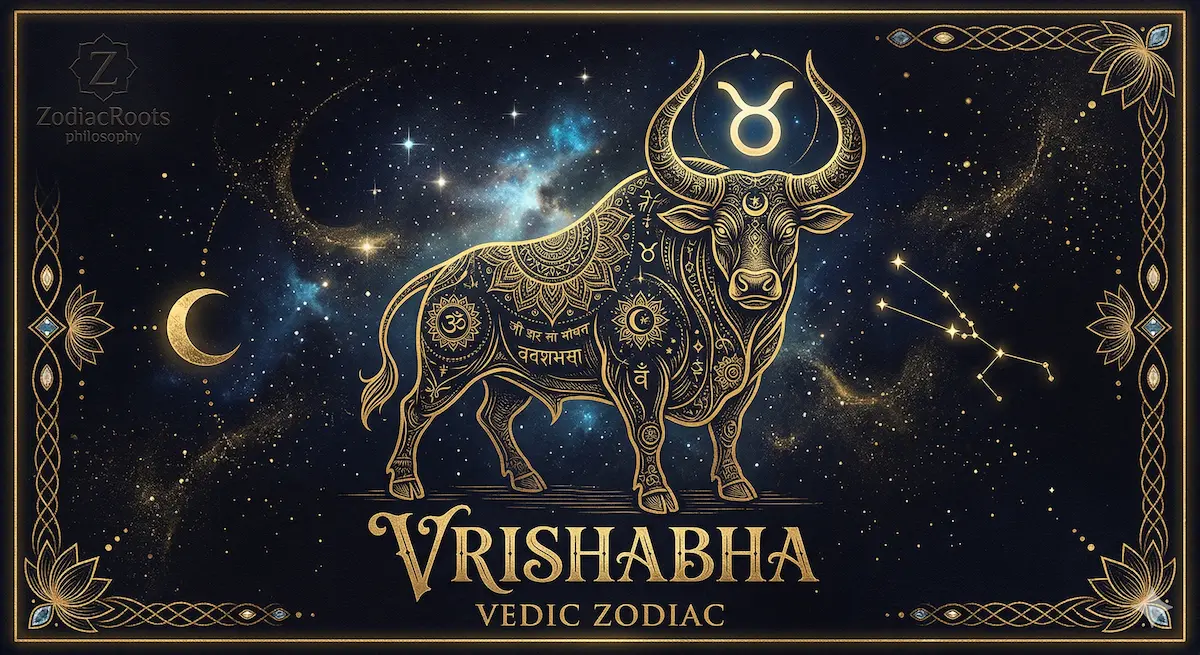
Vrishabha is symbolised by the Bull, an image of strength, steadiness, endurance, and connection to the land. The bull does not move without reason, but once committed, it is difficult to dislodge. This symbolism reflects one of the sign’s central themes: unwavering force expressed through consistency rather than haste.
As an earth sign ruled by Venus, Vrishabha combines solidity with sensual appreciation. It wants life to feel rooted, valuable, and materially as well as emotionally nourishing. In a deeper Vedic sense, this sign can also reflect karmic lessons around attachment, value, self-worth, and the proper enjoyment of earthly life. Its path is not to reject comfort, but to build it wisely and not become imprisoned by it.
Vrishabha vs Taurus in Vedic Astrology
Vrishabha is often compared with Taurus, and the overlap is clear: both are associated with stability, sensuality, patience, loyalty, and material grounding. However, the Vedic perspective often gives Vrishabha a more karmic and inward dimension. It is not only about taste, security, or a steady personality. It is also about dharma, value, embodiment, and the soul’s relationship with what it chooses to preserve.
In practice, the two can look similar on the surface, but Vrishabha often carries a stronger emphasis on karmic value, embodiment, and the soul’s need for enduring foundations.
Vrishabha Meaning in Vedic Astrology Through Venus
Venus, or Shukra, rules Vrishabha in classical Jyotish. That rulership explains why Vrishabha meaning in Vedic astrology is tied not only to patience and stability, but also to harmony, pleasure, refinement, love, aesthetic intelligence, and a desire to create beauty that lasts. Vrishabha is not merely practical; it is practical in a way that wants life to feel graceful, nourishing, and worth inhabiting fully.
When balanced, this Venusian energy creates elegance, loyalty, affection, and good judgement around resources and relationships. When imbalanced, it may become possessiveness, complacency, vanity, or excessive attachment to pleasure. The challenge is not to reject enjoyment, but to let beauty support growth rather than replace it.
Famous People Often Associated with Vrishabha
These examples are cultural references only and may vary depending on exact birth data, ayanamsa, and the astrological method used. They are included to illustrate symbolic Vrishabha themes rather than to make definitive astrological claims.
Why Vrishabha Matters in a Wider Soul Profile
Understanding Vrishabha can reveal how you build security, what you value deeply, and how you relate to comfort, loyalty, and the physical world. This sign often shows where your life path involves patience, preservation, embodiment, and the creation of stable foundations. It can also point to talents in finance, design, art, food, hospitality, property, healing, and any area that depends on consistency and tangible results.
In a wider birth chart, Vrishabha may indicate where you are asked to slow down, trust the process, and build something real over time. When balanced, it becomes one of the clearest signatures of reliability, sensual intelligence, and grounded devotion. When unbalanced, it may drift into inertia, over-attachment, or resistance to necessary change. Its deeper lesson is not simply to seek comfort, but to create a life of real value, beauty, and enduring strength.
Explore More About Vedic Astrology
To place Vrishabha in a wider context, it helps to explore the broader Vedic Astrology guide on ZodiacRoots and compare how the Rashis relate to karma, temperament, and soul development.
Discover Your Full Vedic Blueprint
Vrishabha is only one layer of your astrological identity. Discover how your Vedic sign interacts with your Moon sign, Rising sign, Chinese Zodiac, Mayan Seal, Celtic Tree, and Egyptian Guardian in your complete ZodiacRoots profile.
Frequently Asked Questions About Vrishabha
What does Vrishabha mean in Vedic astrology?
Vrishabha represents stability, patience, loyalty, sensuality, comfort, and grounded strength. It is one of the strongest signs of endurance and steady value in Jyotish.
Is Vrishabha the same as Taurus?
Vrishabha is the Vedic sign most commonly compared with Taurus. However, Vedic astrology interprets it through karma, dharma, value, and deeper soul-level attachment, which can make it feel more rooted and spiritually weighted.
Why can Vrishabha seem stubborn or resistant to change?
Vrishabha naturally values stability and tends to trust what has proven reliable. That steadiness is a major strength, but when pushed too hard it can become rigidity or reluctance to leave familiar ground.
Which planet rules Vrishabha in Jyotish?
Vrishabha is ruled by Venus, or Shukra, the planet associated with beauty, pleasure, attraction, refinement, relationships, and both material and emotional nourishment.
What are the best qualities of Vrishabha natives?
Their best qualities include loyalty, patience, reliability, practical intelligence, calm endurance, and the ability to create beauty, comfort, and stability that lasts.
Explore Other Vedic Signs
Explore Further
ZodiacRoots blends ancient astrological systems into one deeper, more connected soul profile.
FAQ About Vrishabha in Vedic Astrology
What is the meaning of Vrishabha in Vedic astrology?
Vrishabha in Vedic astrology is associated with stability, embodiment, endurance, value, comfort, and the capacity to build slowly. It describes a symbolic mode of expression within Jyotish rather than a complete verdict on personality by itself.
Is Vrishabha the same as Taurus in Western astrology?
Vrishabha broadly corresponds to Taurus, but the systems are not identical. Vedic astrology uses the sidereal zodiac and interprets signs through a distinct Jyotish framework, so the comparison is useful but should not be treated as a perfect one-to-one translation.
What rules Vrishabha in Jyotish?
Vrishabha is ruled by Venus, known in Jyotish as Shukra. This rulership helps explain why the sign is often interpreted through themes connected with stability, embodiment, endurance, value, comfort, and the capacity to build slowly.
What are the main Vrishabha traits?
The main Vrishabha traits include patience, loyalty, sensual awareness, steadiness, persistence, and practical reliability. Its challenges may include stubbornness, over-attachment to comfort, resistance to change, and holding on too long, especially when the sign operates without balance or wider chart context.
How does Vrishabha appear in love and relationships?
In relationships, Vrishabha tends to be loyal, tactile, steady, and drawn to relationships that feel trustworthy, affectionate, and materially or emotionally secure. The full expression depends on the Moon, Venus, the Ascendant, house emphasis, and the broader chart.
What changes if Vrishabha is the Sun sign, Moon sign, or Rising sign?
A Vrishabha Sun seeks lasting value and grounded identity. A Vrishabha Moon needs emotional steadiness and calm reassurance. A Vrishabha Rising presents through composure, persistence, and a naturally stabilising presence.