
Vedic Astrology: Jyotish, Rashis & Sidereal Signs
Discover Vedic astrology, the science of light, and explore the 12 Rashis, the Moon sign, the Lagna, and the deeper karmic logic of the sidereal zodiac.
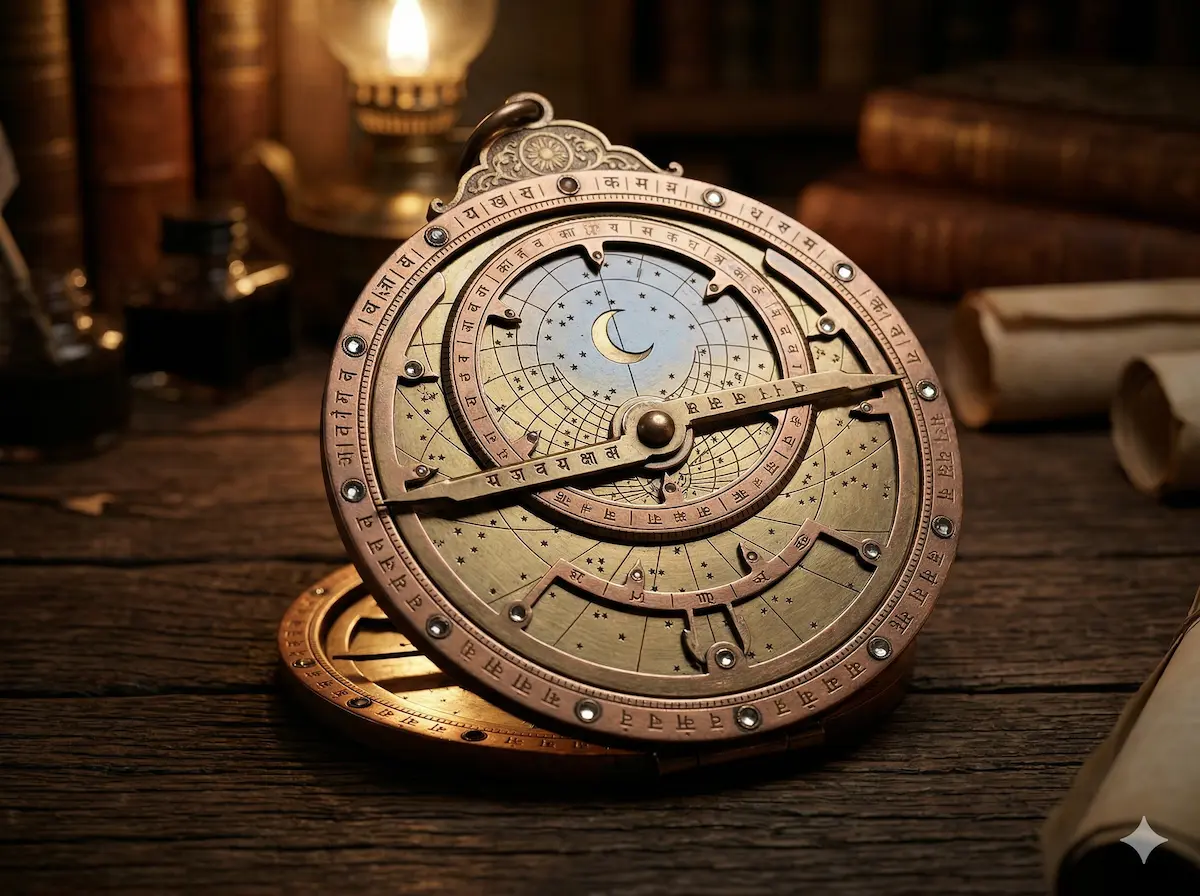
Vedic astrology, also known as Jyotish, is one of the oldest astrological systems in the world. Unlike Western astrology, which uses the tropical zodiac, Vedic astrology uses the sidereal zodiac, which is aligned with the fixed stars.
In practice, that means your Vedic sign can be different from your Western Sun sign. However, the difference is not only technical. Vedic astrology also places far more emphasis on the Moon sign, the Lagna, and the karmic meaning of planetary patterns. Because of that, it often feels more spiritual, more symbolic, and more focused on timing and destiny.
If you are completely new to the subject, this page gives you the foundation. Then, you can go deeper through the individual Rashi pages, the 12 Rashis guide, and the tools that help you find your Rashi and understand what your Vedic sign means.
Vedic Astrology vs Western Astrology
Uses the tropical zodiac and follows the seasons and equinoxes.
Usually gives strong attention to the Sun sign and psychological identity.
Often focuses on personality development, self-expression, and conscious growth.
Uses the sidereal zodiac and aligns signs with the fixed constellations.
Gives more weight to the Moon sign, the Lagna, karma, and dharma.
Often feels more spiritual, fate-aware, and connected to timing, purpose, and soul lessons.
The 12 Rashis in Vedic Astrology
In Jyotish, the 12 Rashis form the basic structure of the zodiac. Each sign has a ruling planet, a natural element, and a distinct temperament. Your Rashi usually refers to your Moon sign in Vedic practice, and therefore it is deeply connected to your mind, emotional nature, and lived experience. You can explore the full framework in our guide to the 12 Rashis of Vedic astrology.
Explore the 12 Rashis
Key Concepts in Vedic Astrology
Your Moon sign. It reflects mind, emotion, mood, and the inner way you process life.
Your Ascendant. It sets the chart and reflects body, presence, and the way destiny begins to unfold.
The 27 lunar mansions that add precision, symbolism, spiritual tone, and karmic nuance.
The planetary forces that shape karma, timing, obstacles, opportunity, and growth.
The 12 houses that show where life themes play out: self, family, work, relationship, faith, loss, and more.
Karma shows the pattern you inherit; dharma points to the path you are meant to walk more consciously.
Why the Moon Sign and Lagna Matter So Much
In Vedic astrology, the Moon sign and Lagna often carry more interpretive weight than the Sun sign. Therefore, Vedic readings usually feel more emotional, more karmic, and more focused on the lived inner experience of the soul.
The Rashi describes the mind and emotional nature. It shows how life is received from the inside. The Lagna describes the body, presence, and the way life is approached from the outside. Together, they offer a powerful starting point for self-understanding.
If you are comparing systems, it helps to place your Vedic chart alongside your Western Moon sign, your Ascendant, and your Sun sign. That way, you can see how the same person is being described through different symbolic lenses.
Helpful Vedic Astrology Pages
A simple entry page for understanding what a Vedic sign is and why it can differ from your Western sign.
Useful if you want to move quickly from theory to your own Moon sign in the sidereal zodiac.
A broader guide to the 12 Rashis, their symbolism, and the foundations of Vedic sign interpretation.
Learn how the Ascendant shapes body, character, direction, and the whole structure of the chart.
Explore the 27 lunar mansions and see how they add detail, tone, and karmic nuance to the chart.
Understand the 9 planetary forces that shape karma, timing, growth, pressure, and opportunity.
See how the 12 houses map life areas such as family, work, relationships, faith, loss, and direction.
Discover how inherited patterns and conscious path work together in Vedic interpretation.
The 27 Nakshatras and the Deeper Layer of Jyotish
One of the richest parts of Vedic astrology is the system of Nakshatras, or lunar mansions. These 27 divisions add detail and depth beyond the sign itself. Because of them, two people with the same Rashi can still feel very different in temperament, tone, and life emphasis.
Ashwini · Bharani · Krittika · Rohini · Mrigashira · Ardra · Punarvasu · Pushya · Ashlesha · Magha · Purva Phalguni · Uttara Phalguni · Hasta · Chitra · Swati · Vishakha · Anuradha · Jyeshtha · Mula · Purva Ashadha · Uttara Ashadha · Shravana · Dhanishta · Shatabhisha · Purva Bhadrapada · Uttara Bhadrapada · Revati
Karma, Dharma, and the Soul’s Direction
Vedic astrology is often used to understand more than personality. It is also a tool for exploring karma and dharma, life patterns, responsibility, and spiritual purpose. Therefore, people often turn to Jyotish when they want clarity around timing, difficulty, growth, and meaning.
- Sanchita Karma: accumulated karmic pattern from the wider soul journey.
- Prarabdha Karma: the portion ripening in this lifetime.
- Kriyamana Karma: the karma being shaped now through present choice.
- Dharma: the soul’s path, duty, and deeper direction.
How to Calculate Your Vedic Sign
Day, month, and year
Important for Lagna
City and country
If you want a broader symbolic picture, it also helps to compare your Vedic chart with your Chinese Zodiac, Mayan Calendar, Celtic Tree, and Egyptian Guardians. That is one of the core ideas behind ZodiacRoots.
Your Vedic sign is only one part of your symbolic identity. Discover your Rashi, Lagna, Western signs, Chinese Zodiac, Mayan Seal, Celtic Tree, and Egyptian Guardian in one reading.
Calculate Your 8 RootsFree personalised reading • Instant results • Sidereal and Tropical combined
Frequently Asked Questions About Vedic Astrology
What is Vedic astrology?
Vedic astrology, also called Jyotish, is a traditional Indian astrological system that uses the sidereal zodiac and gives strong importance to the Moon sign, Lagna, karma, and timing.
How is Vedic astrology different from Western astrology?
Vedic astrology uses the sidereal zodiac, while Western astrology usually uses the tropical zodiac. As a result, your Vedic sign can be different from your Western sign.
What is a Rashi in Vedic astrology?
A Rashi usually refers to your Moon sign in Vedic astrology. It is closely linked to emotion, mind, habit patterns, and inner experience.
Why are the Moon sign and Lagna so important?
The Moon sign shows how life is experienced emotionally, while the Lagna shows how life is approached outwardly. Together, they form a key foundation in Jyotish interpretation.
Jyotish is not just a system of signs. It is a symbolic language of timing, karma, and inner light.