Introduction: Do Druids and Celtic Astrology Really Belong Together?
Druids and Celtic Astrology are often linked in modern spiritual writing, especially through the idea of a Celtic Tree Calendar or thirteen sacred tree signs. If you have explored alternative symbolic traditions, you have likely seen this system presented as ancient Druid wisdom — and perhaps even discovered your own sign through the ZodiacRoots calculator.
Yet beneath the beauty of this system lies a more difficult question: did the ancient Druids actually practise astrology based on trees, lunar months, and symbolic birth signs?
The answer is both fascinating and uncomfortable. The system now widely presented as Celtic astrology is not a direct survival from antiquity. In its modern form, it is best understood as a twentieth-century reconstruction — one built from genuine Celtic materials, but not preserved whole from an ancient Druidic manual.
The historical Druids were real. Ogham was real. Celtic calendrical sophistication was real. But the familiar thirteen-tree zodiac, as presented today, is not securely attested in ancient evidence.
The modern Celtic Tree Calendar is best understood not as a fossil from antiquity, but as a modern myth grown from ancient roots.
Part I: Who Were the Druids in Celtic Astrology and Iron Age Culture?
A Pan-Celtic Priesthood
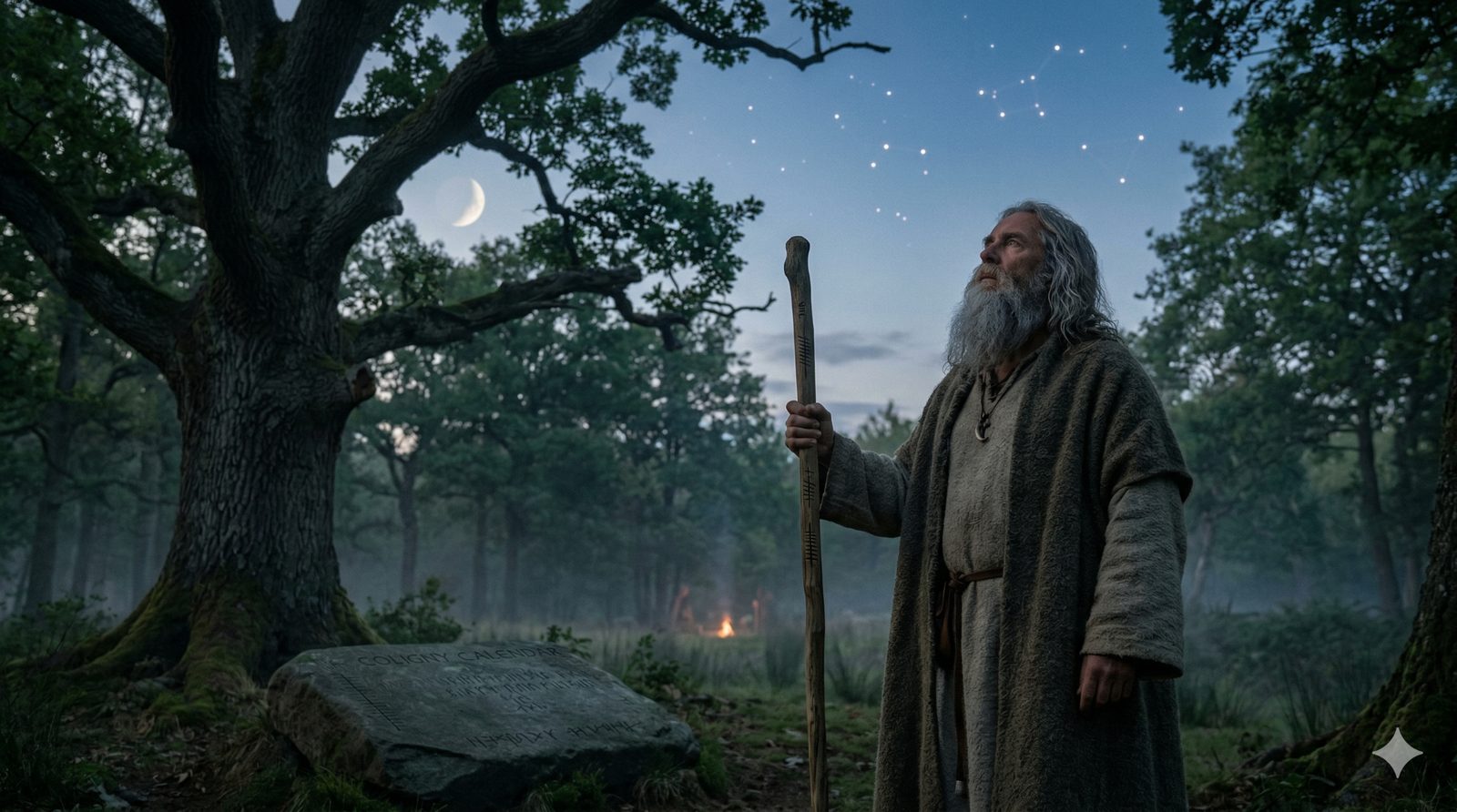
The Druids were the learned and religious elite of ancient Celtic societies. Their influence stretched across major regions of Celtic Europe, especially Gaul and the British Isles, where they appear in classical accounts as ritual authorities, teachers, judges, philosophers, and interpreters of sacred knowledge.
This already places them far beyond the caricature of “forest magicians.” They were not merely ritual performers. They were custodians of memory, doctrine, social order, and cosmological meaning.
More Than “Wizards”
Popular culture often imagines Druids as cloaked figures performing mysterious rites in stone circles. Historical descriptions suggest something far more formidable. They were jurists and diplomats, philosophers and educators, guardians of law, memory, and sacred discourse. Their authority, according to ancient reports, could shape disputes, influence communities, and define what remained within the bounds of the sacred.
That does not prove they practised astrology in the modern technical sense. It does, however, make one point difficult to dismiss: the Druids belonged to a culture of large symbolic systems. They were not strangers to cosmic thinking.
The Oral Tradition: Why We Know So Little
One of the central frustrations in Druidic studies is the absence of a direct Druidic archive. What we know comes mostly from Greco-Roman observers and from later Irish manuscript traditions shaped by Christian scribes centuries after the decline of the original Druidic institutions.
This gap matters. Because the Druids left no surviving theological or astrological handbook of their own, later generations inherited a silence. And wherever there is silence around an ancient spiritual class, imagination eventually moves in.
The Coligny Calendar and the Historical Background of Celtic Astrology
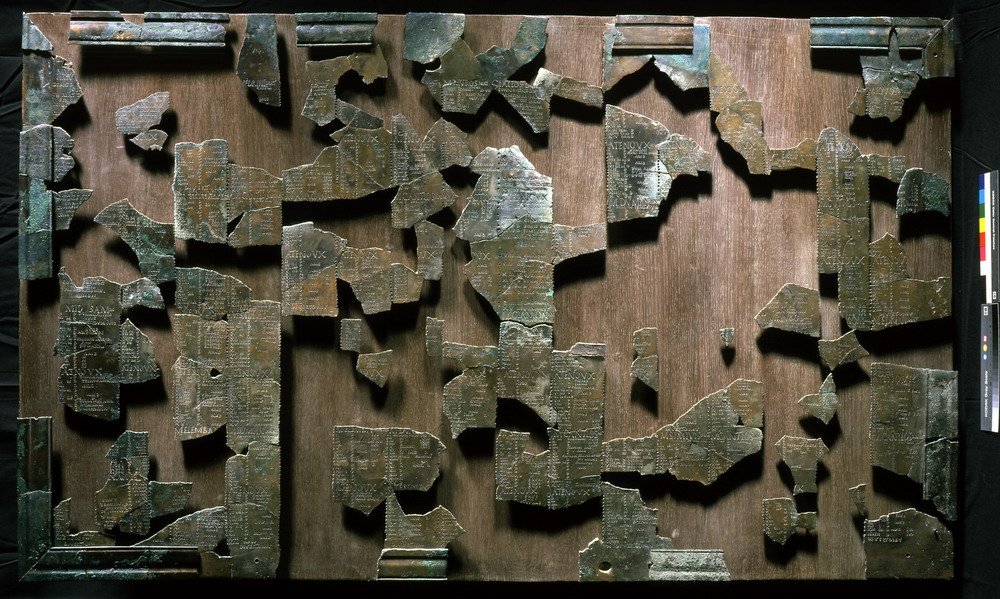
Among the most important artifacts for understanding historical Celtic cosmology is the Coligny Calendar, discovered in 1897 near Lyon, France. This bronze tablet, generally dated to the 2nd century CE, preserves the most substantial archaeological evidence of Celtic timekeeping yet found.
It reveals a sophisticated lunisolar system, coordinating lunar months with solar correction through intercalary adjustments. In other words, the archaeological record does support the idea that Celtic-speaking societies possessed an intellectually serious and structured conception of sacred time.
For the purposes of this discussion, however, the Coligny Calendar matters not only because of what it shows, but because of what it does not show. It contains no trace of the now-familiar thirteen-tree zodiac, no Ogham-based sequence of tree months, and no clear evidence of the Beth-Luis-Nion calendar later associated with Robert Graves.
For readers who want a museum-level overview of the artifact, the Coligny Calendar entry provides a useful starting point, while broader context on Celtic religion can also be found in Britannica’s overview of the Druids.
In other words: the archaeological record supports Celtic calendrical sophistication, but not the modern tree-zodiac system in its popular form.
Simpler external reading:
For a more accessible overview of the same topic, see this guest article on Starzology about
Celtic astrology and the modern tree zodiac
.
Part II: Druids and Celtic Astrology in the 13-Moon Myth of Robert Graves
Where did the thirteen-month tree calendar come from? If the ancient Druids did not leave us such a system, who did?
To answer that question, we must leap not to late antiquity, but to 1948. That year, Robert Graves — poet, novelist, classicist, and author of I, Claudius — published The White Goddess: A Historical Grammar of Poetic Myth, a work that became one of the most influential and controversial mythological texts of the twentieth century.
The modern Celtic Tree Calendar did not emerge because archaeologists uncovered a bronze Druidic horoscope chart in a peat bog. It emerged because Graves took authentic fragments — tree symbolism, Celtic lore, Ogham associations, lunar recurrence — and composed from them a mythic structure of extraordinary imaginative power.
A Poetic Reconstruction
Graves proposed that beneath the fragments of European myth there survived traces of an older religious vision centred on a primordial Goddess. He believed that ancient poetry preserved coded evidence of this lost tradition, and from this method — literary, associative, and highly imaginative — he built a symbolic framework linking lunar cycles, sacred kingship, poetic inspiration, and the Ogham alphabet.
In that sense, the tree zodiac was not excavated. It was written.
The Role of Ogham
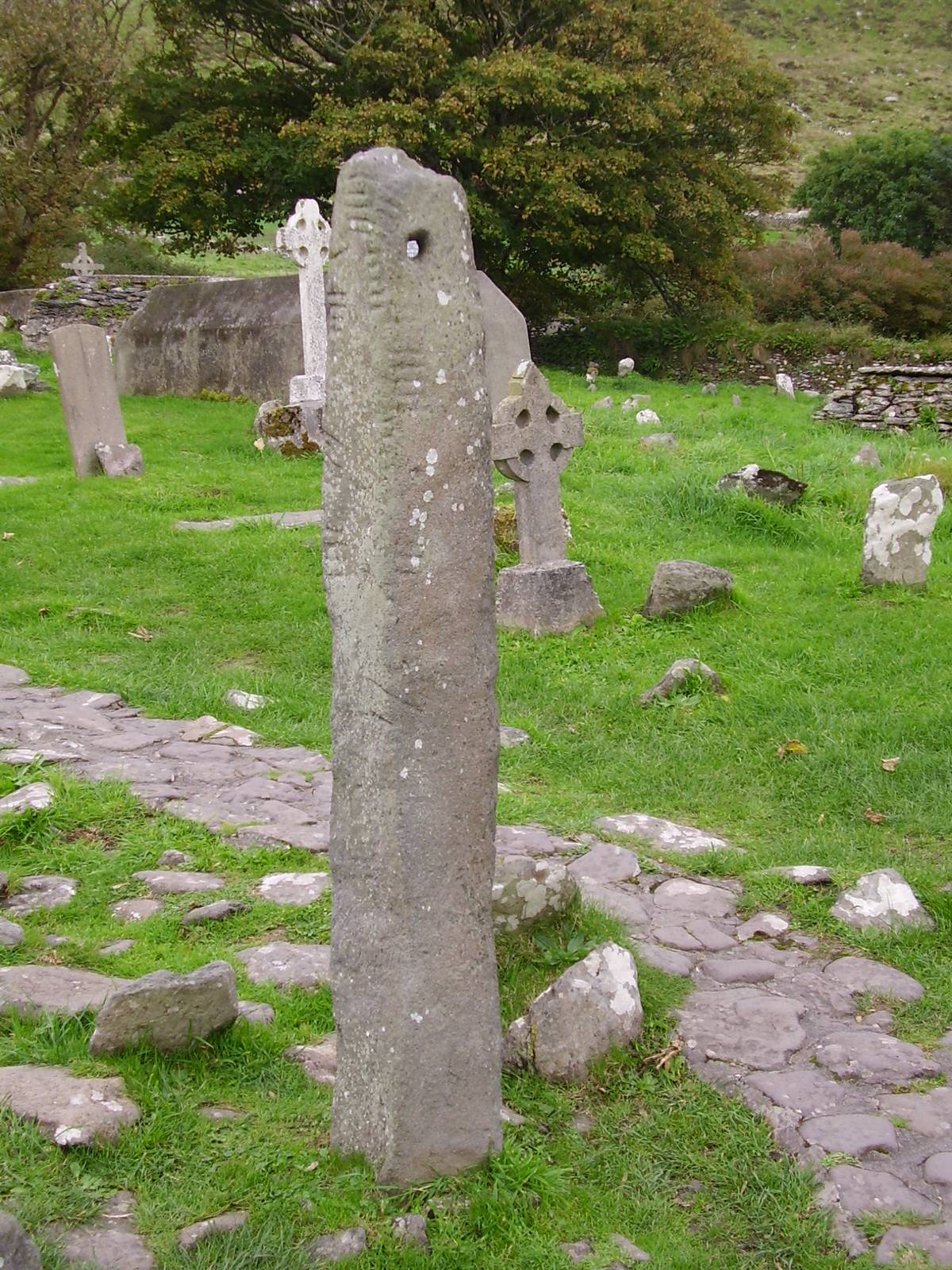
Ogham itself is historically real. It survives as an early medieval script, especially associated with Ireland, and later tradition strongly linked several of its letters with tree names or woody plants. This makes Ogham the most plausible symbolic bridge between historical Celtic culture and later tree-based esoteric systems.
But that bridge must be handled carefully. The existence of Ogham does not automatically validate the modern thirteen-tree zodiac. It explains the lineage of the symbolism, not the historicity of the final astrological framework.
The Academic Critique
Scholars have long been sceptical of Graves’s claims. The criticism is not that he lacked brilliance, but that he often treated poetic intuition as historical demonstration. Critics argue that he made elastic links between mythic motifs, linguistic forms, and symbolic structures because they fitted the pattern he wanted, not because the evidence required them.
That conclusion may disappoint readers seeking an untouched ancient revelation. But it should also sharpen our thinking. What we call Celtic Tree Astrology is not a fossil. It is a modern mythological architecture built from ancient stone.
This distinction is not about declaring one system “true” and the other “false.” It is about understanding each on its own terms. Historical Celtic cosmology offers a window into the timekeeping, ritual intelligence, and symbolic order of ancient Celtic-speaking societies. Modern Neo-Druid astrology, by contrast, offers a living spiritual language shaped by literary imagination, revivalist energy, and the enduring human desire to reconnect sky, season, and sacred landscape.
Part III: The Neo-Druid Revival and Modern Celtic Astrology
The story does not end with Robert Graves. It becomes culturally potent because his work entered a wider revival. Modern neo-Druidism and broader Celtic revival movements drew from folklore, romantic nationalism, antiquarianism, comparative mythology, environmental spirituality, and the modern hunger for rootedness.
In that environment, Graves’s reconstruction found fertile ground. It offered a way to imagine the sacred not only through doctrine, but through grove, moon, season, and tree. The modern world did not merely want evidence. It wanted re-enchantment.
And the tree calendar provided exactly that: a symbolic map in which identity could once again be read through living nature rather than industrial time alone.
Part IV: Why Druids and Celtic Astrology Still Matter Symbolically
This is the point at which many debunking articles become intellectually thin. They assume that once a system is shown to be reconstructed, it is therefore empty. That is not serious thinking.
A great deal of religious and symbolic life operates through layered inheritance, reinterpretation, recombination, and revival. The fact that a system is not intact from 50 BCE does not automatically make it false, useless, or spiritually shallow.
At ZodiacRoots, the better framework is astrological synthesis.
The Root Principle
Western Astrology tends to focus on the solar architecture of identity, visibility, will, and personal style. Lunar and karmic systems such as Vedic Astrology deepen questions of inner disposition, timing, and soul-pattern. The Celtic Tree current contributes something different: what we may call the Terrestrial Anchor.
It is the reminder that human beings are not shaped only by distant celestial geometry, but also by local ecology, season, texture, and biological rhythm. The power of the Celtic layer does not depend on the literal claim that every modern sign division was used by Iron Age Druids. Its power lies in the fact that it reconnects symbolic identity with the Earth.
It pulls astrology downward again — from sky to soil.
Why the 13-Month Idea Still Matters
The thirteen-moon framework has enduring appeal because it symbolically resists the flattening logic of modern time. Whether or not the popular version is historically ancient, it evokes a rhythm closer to recurrence, gestation, tides, agricultural memory, and seasonal embodiment than the abstract regularity of modern civil calendars.
Its attraction is not merely antiquarian. It is corrective. It asks modern readers to remember that time once had texture, ritual gravity, and ecological meaning.
In this sense, Celtic astrology becomes less a claim of perfect historical preservation and more a language of re-rooting.
Archetypal Depth and Biological Resonance
The Oak is not a meaningful sign merely because a modern esoteric writer assigned it a date range. It carries force because oak has long symbolised endurance, sovereignty, rootedness, and structural stability in European memory. Birch suggests cleansing and beginning. Holly evokes defence, continuity, and disciplined vitality.
These correspondences are powerful because they are not arbitrary. They arise from the observed character of the trees themselves, filtered through long cultural memory.
This is why the Celtic system can remain symbolically valid even when handled carefully historically. It is not validated by pretending to be older than it is. It is validated by its capacity to reveal something archetypally true. You cannot have branches without roots.
Part V: Myth with Integrity, History with Respect
There are two opposite errors in discussions of Celtic astrology. The first is naïve literalism: presenting the modern tree zodiac as a perfectly preserved ancient Druidic system. The second is reductionist dismissal: assuming that because the present form is reconstructed, it must therefore be meaningless.
A stronger position holds both truths at once. It honours evidence without collapsing imagination. It respects scholarship without losing symbolic intelligence.
Not credulity. Not cynicism. Disciplined wonder.
Why This Distinction Matters for Modern Readers
Understanding the difference between historical Celtic cosmology and modern Neo-Druid astrology does not weaken the experience. It strengthens it. It allows you to approach the Celtic Tree tradition with both imagination and honesty.
A tradition does not become worthless because it was reconstructed. It becomes meaningful when reconstruction is honest, symbols are alive, and myth is held with respect rather than confusion.
Conclusion: Druids and Celtic Astrology with Reverence and Clarity
The Druids left us no complete astrological handbook. What survives instead are traces: references in classical sources, fragments of sacred reputation, a script carved into stone, a sophisticated calendar from Celtic-speaking antiquity, and a long afterlife of remembered trees.
Robert Graves took some of those traces and arranged them into a mythic symphony. Scholars were right to challenge his historical claims. But the endurance of the system he helped popularise tells us something important: people are still searching for a language in which identity is not only celestial, but ecological.
That is why Druids and Celtic Astrology still matter. At ZodiacRoots, we do not include this layer as a museum relic or as an uncritical fantasy of ancient certainty. We include it as a specialised nature filter — a terrestrial complement to celestial systems.
When you place the precision of astronomical calculation beside the symbolic force of tree wisdom, you stop seeing yourself as a flat personality type floating under generic stars. You begin to see yourself more fully: a cosmic being with deep terrestrial roots.
Frequently Asked Questions About Druids and Celtic Astrology
Did ancient Druids really practise Celtic astrology?
There is no secure ancient evidence for the modern thirteen-tree zodiac as a complete Druidic astrological system. What exists is a mixture of historical Celtic symbolism, real calendrical sophistication, Ogham associations, and later modern reconstruction.
Is the Celtic Tree Calendar historically authentic?
Not in the strict sense usually claimed online. The modern Celtic Tree Calendar draws on genuine Celtic materials, but its popular astrological form is largely shaped by twentieth-century interpretation, especially through Robert Graves.
What is the Coligny Calendar?
The Coligny Calendar is a bronze lunisolar calendar from Roman Gaul and the strongest archaeological evidence for sophisticated Celtic timekeeping. It supports the idea of advanced calendrical thought, but not the popular tree-sign zodiac in its current form.
Why does Celtic astrology still matter today?
Because it reconnects identity with ecology, season, and symbolic nature. Even when handled critically, the Celtic layer adds a grounded and archetypal dimension to broader astrological interpretation.
Ready to discover your Terrestrial Anchor?
Calculate your Celtic Tree sign and see how it fits into your wider ZodiacRoots profile.
Related reading
Discover More Astrology Articles You May Like
Explore related ZodiacRoots articles selected by topic first, then completed with fresh astrology reads.