Dragon Chinese Zodiac Meaning
Vision, vitality, and presence—explore the essence of the Dragon in the Chinese zodiac.
The Dragon in the Chinese zodiac symbolizes vision, vitality, and a commanding presence. People born in Dragon years are often associated with ambition, charisma, and a drive to inspire others. Yet the Dragon Chinese zodiac meaning goes beyond surface traits, revealing tensions between confidence and vulnerability, along with a deep need for authenticity in leadership, love, and personal growth.
What Is the Dragon in the Chinese Zodiac?
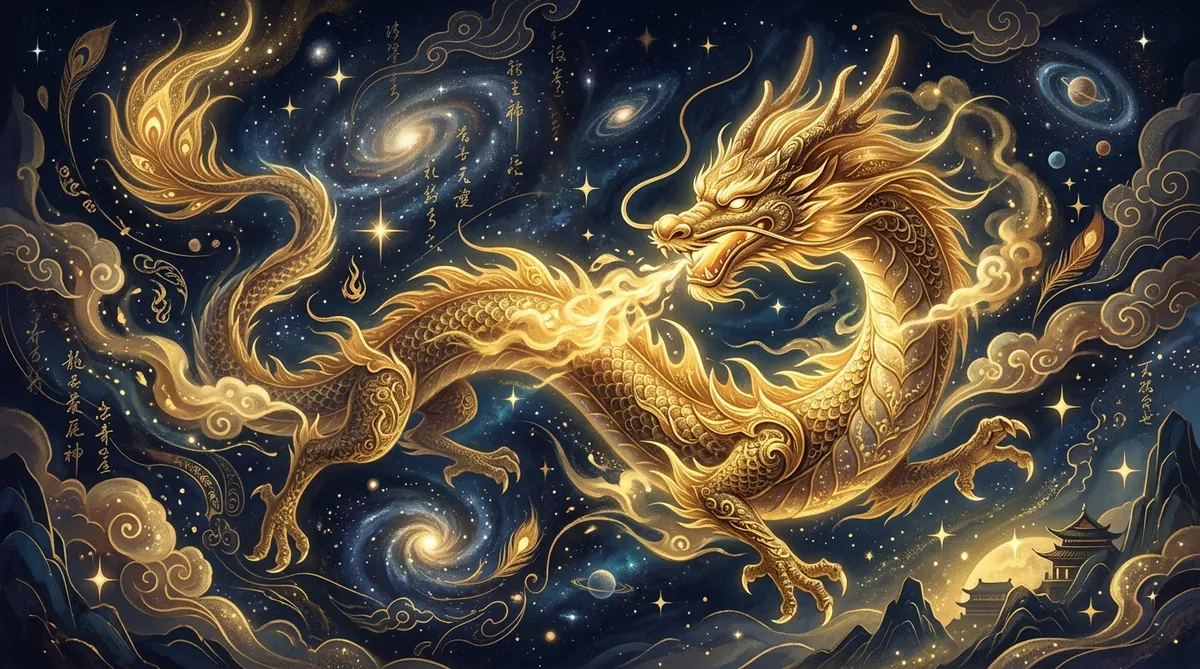
The Dragon is the fifth animal in the 12-year Chinese zodiac cycle, associated with the Earthly Branch Chén and years such as 2024, 2012, 2000, 1988, and earlier. In Chinese astrology, the Dragon represents yang energy: active, outward, dynamic, and linked to power, creativity, and auspicious force.
Unlike Western astrology signs, which are based on birth months, Chinese zodiac signs are determined by birth year. This creates a different interpretive framework, one that emphasizes larger life cycles, cultural symbolism, and the role of elemental influences such as Wood, Fire, Earth, Metal, and Water.
The essence of the Dragon centers on vision, vitality, and presence. It is a sign connected with inspiration, transformation, and the ability to move others through force of personality.
Core Personality of the Dragon
At its core, the Dragon personality combines confidence with idealism. Dragons often appear as natural leaders who radiate energy, ambition, and bold direction. They tend to think in large patterns, seeing possibilities others miss and feeling compelled to push toward something greater.
At the same time, this strength can create inner tension. Dragons may struggle when their grand vision collides with everyday limitations, or when their natural intensity is misunderstood as arrogance or control. Beneath the commanding surface, there is often a real sensitivity around meaning, recognition, and personal integrity.
This is why the Dragon is not simply a sign of strength. It is also a sign of high expectation, passion, and vulnerability around impact. Dragons usually want their life to matter, and that desire shapes much of their behaviour.
Strengths of the Dragon
- Natural leadership and ability to inspire others
- High energy and enthusiasm for ambitious projects
- Creative vision that spots opportunity quickly
- Resilience when facing pressure or setbacks
- Charismatic presence that attracts attention and loyalty
Challenges of the Dragon
- Can be perceived as arrogant or domineering in groups
- May struggle with impatience when progress feels slow
- Tendency to take on too much and risk burnout
- Difficulty accepting criticism or visible failure
- May neglect detail while pursuing big ideas
Symbolism of the Dragon in Chinese Zodiac Tradition
The Dragon has one of the richest symbolic roles in Chinese culture. It is associated with imperial authority, rain, fertility, protection, and cosmic vitality. Unlike the darker meanings dragons sometimes carry in Western stories, the Chinese Dragon is generally an auspicious and elevated symbol.
In the zodiac, the Dragon represents more than charisma. It symbolizes transformative force, renewal, and the tension between power and responsibility. This gives the sign a catalytic quality: Dragons tend to push movement, change, and expansion rather than maintaining calm stability.
That symbolism helps explain why Dragon individuals often feel driven toward impact. Their vitality is not merely social confidence. It often feels like a pressure to create, lead, or reshape something larger than themselves.
Dragon Chinese Zodiac Years
Common birth years linked with the Dragon include 1928, 1940, 1952, 1964, 1976, 1988, 2000, 2012, and 2024.
Because the Chinese zodiac follows the lunar calendar rather than the January-to-December Gregorian year, people born in January or early February may belong to the previous zodiac animal depending on the Lunar New Year date.
Dragon in Love, Work and Personal Growth
Dragon in Love
In love, Dragons tend to seek passion, admiration, and a sense of shared purpose. They are often generous and protective partners, and they usually want relationships that feel alive, meaningful, and inspiring.
Their challenge is learning to balance intensity with empathy. When frustrated, Dragons may become too dominant, impatient, or demanding. Emotional maturity often comes through discovering that real closeness requires listening as well as leading.
Dragon at Work
At work, Dragons usually thrive in spaces that reward leadership, initiative, creativity, and influence. Entrepreneurship, management, performance, media, strategy, and innovation-driven roles often suit this sign well.
However, Dragons can struggle in environments where they feel constrained, underused, or surrounded by indecision. Their development often depends on learning how to delegate, collaborate, and stay engaged with execution rather than vision alone.
Dragon and Personal Growth
For personal growth, Dragons benefit from cultivating patience, humility, and emotional intelligence. Their power becomes more sustainable when they stop trying to prove strength at all times and instead allow flexibility, vulnerability, and steady practice to support their vision.
The Dragon’s greatest evolution often comes when inspiration is matched with discipline, and presence is matched with depth.
Famous People Often Associated with the Dragon
These examples are cultural references only and may vary depending on birth-year boundaries, calendar conventions, and interpretive method.
Bruce Lee
Often associated with the Dragon, Bruce Lee is frequently seen as an example of vitality, charisma, discipline, and transformative influence.
Salvador Dalí
Commonly cited in Dragon discussions for his visionary creativity and commanding artistic persona, Dalí reflects the Dragon’s symbolic link with imagination and presence.
Rihanna
Often connected with the Dragon sign, Rihanna is widely seen as embodying ambition, charisma, innovation, and visible personal power across both music and business.
Dragon as a Birth-Year Animal — and Beyond the Annual Sign
On this page, the Dragon Chinese zodiac meaning is explained mainly through the familiar annual animal associated with the birth-year cycle. This is the version of the Chinese zodiac most people first encounter when they ask whether they are Rat, Ox, Tiger, Rabbit, Dragon, Snake, Horse, Goat, Monkey, Rooster, Dog, or Pig.
In a deeper Chinese astrology framework, however, animal symbolism is not limited to the year. In BaZi Four Pillars, a full birth structure includes year, month, day, and hour pillars. Each pillar has an Earthly Branch associated with one of the 12 zodiac animals.
This means the Dragon can appear not only as a year animal, but also as a month animal, day animal, or hour animal in a more complete Chinese symbolic profile. Those positions do not all mean the same thing: they describe different layers of background, development, intimate life, and private potential.
The guide you are reading focuses on the annual Dragon sign. To move beyond the annual animal and see the Chinese layer inside a fuller ZodiacRoots profile, continue to Calculate Your 8 Roots.
Why the Dragon Matters in a Wider Soul Profile
Understanding the Dragon Chinese zodiac meaning matters because it offers a symbolic framework for self-reflection. It highlights how qualities such as vision, vitality, courage, and presence may shape behaviour, ambition, and relationship style.
Even so, the Dragon does not define a whole personality on its own. It is only one interpretive layer. Other astrological dimensions, such as Moon sign, Rising sign, Vedic placements, and personal life experience, can add essential nuance.
Within the ZodiacRoots approach, the Dragon becomes far more meaningful when read alongside the wider 8 Roots profile. That broader view helps show how inspiration, emotion, identity, and deeper life patterns interact rather than reducing a person to one symbol.
Go Beyond Your Chinese Zodiac Sign
Your Dragon sign is just the beginning. To understand the wider picture, it helps to connect it with your Moon sign, Rising sign, and other symbolic layers.
Explore how the Dragon fits into your full ZodiacRoots reading and discover a richer view of your personality, purpose, and astrological profile.
Frequently Asked Questions About the Dragon
What does the Dragon mean in the Chinese zodiac?
In the Chinese zodiac, the Dragon symbolizes vision, vitality, presence, and transformative force. It is often associated with leadership, luck, charisma, and ambition, but it also carries deeper themes around responsibility, vulnerability, and the challenge of using power wisely.
What are the key Dragon zodiac traits?
Common Dragon traits include being visionary, charismatic, ambitious, energetic, and commanding. Dragons often stand out naturally, although they may also struggle with impatience, intensity, or a tendency to dominate when under pressure.
How does the Dragon sign affect love and work?
In love, Dragons usually seek admiration, passion, and meaningful connection, though they benefit from balancing intensity with empathy. In work, they tend to do well in leadership and creative roles, especially where they can innovate, influence, and build something significant.
Is the Dragon sign the whole personality?
No. The Dragon sign is one interpretive layer within Chinese astrology. A fuller personality picture comes from combining it with other factors, including emotional patterns, social style, life experience, and broader systems such as the ZodiacRoots 8 Roots framework.
Is the Dragon only a birth-year Chinese zodiac sign?
In everyday Chinese zodiac content, the Dragon is usually discussed as an annual birth-year animal. In deeper Chinese astrology systems such as BaZi Four Pillars, the same animal branch may also appear in the month, day, or hour pillar.
Can Dragon appear in the month, day, or hour pillar?
Yes. In BaZi Four Pillars, animal branches are linked not only to the year pillar, but also to month, day, and hour pillars. That means the Dragon can appear in different parts of a fuller Chinese symbolic profile, where each position carries a different interpretive role.