
Makara in Vedic Astrology: Meaning, Traits and Spiritual Purpose
Where discipline meets destiny in the climb toward lasting legacy.
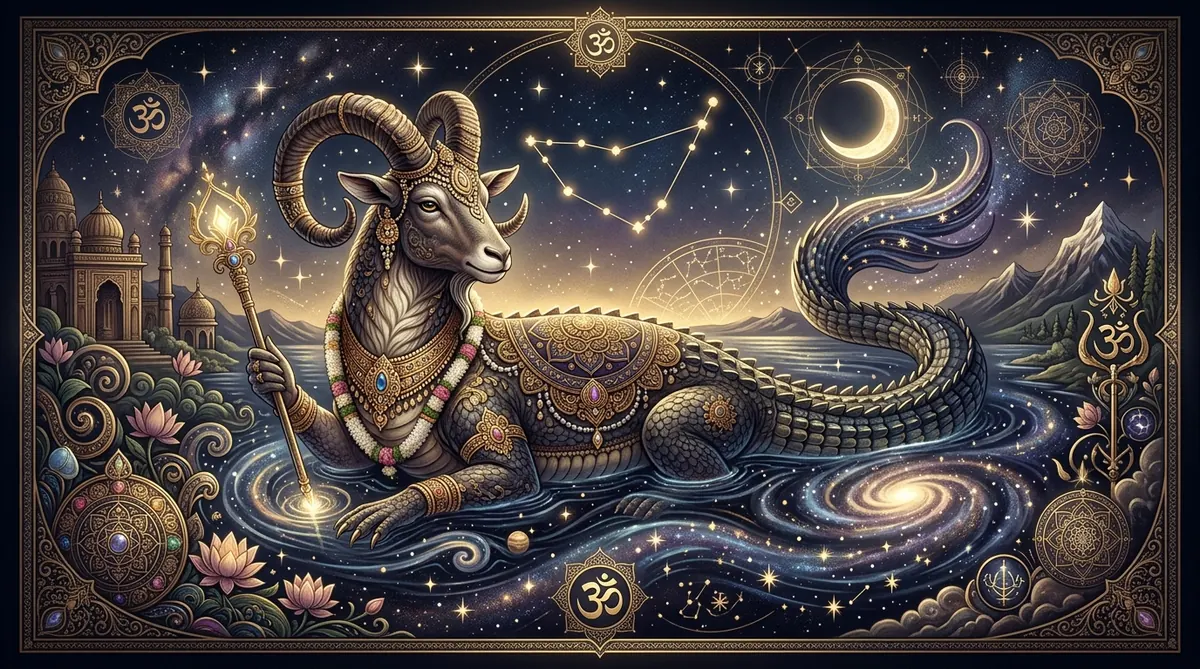
Makara, the Vedic sign linked with discipline, endurance, responsibility and long-term mastery.
Makara, the Vedic sign often linked with Capricorn, is one of the strongest symbols of endurance, structure, and long-term ambition in Jyotish. It is a sign that does not chase quick success. Instead, it builds slowly, carefully, and with purpose. If you want to understand the deeper meaning of Makara in Vedic astrology, you need to look beyond career ambition and into its karmic relationship with responsibility, patience, and legacy.
Quick Answer: What Does Makara Mean in Vedic Astrology?
Makara in Vedic astrology is the sign of discipline, responsibility, endurance, patience and long-term achievement. Often compared with Capricorn, Makara is traditionally ruled by Saturn in classical Jyotish, giving it maturity, structure, karmic seriousness and a strong drive to build something lasting.
What Is Makara in Vedic Astrology?
In Vedic astrology, Makara is the sign of disciplined growth, strategic effort, and earned authority. It belongs to the earth element, which gives it realism, steadiness, and practical intelligence. Makara is ruled by Saturn, the planet most closely associated with time, karma, endurance, and maturity. This combination makes Makara one of the most resilient and purposeful signs in the zodiac.
Makara does not rely on impulse, luck, or dramatic gestures. It prefers tested methods, patient construction, and measurable progress. This sign understands that what lasts must be built with effort. Because of that, Makara energy often appears serious, contained, and highly self-controlled. Yet behind that reserve is a deep commitment to responsibility, dignity, and meaningful achievement.
Core Personality of Makara
Makara individuals often carry a strong inner drive to create order out of uncertainty. They are planners, builders, organisers, and protectors of long-term goals. Rather than seeking applause in the present, they tend to focus on what will remain valuable over time. This gives them a natural affinity for work that demands patience, discipline, and leadership rooted in competence.
Emotionally, Makara can be more guarded than expressive. Feelings are often filtered through responsibility, caution, and self-command. However, this does not mean they lack depth. On the contrary, Makara loyalty can be profound. Once trust is earned, they often become steadfast allies who value commitment, respect, and endurance more than emotional display.
Strengths of Makara
- Exceptional long-term planning and strategic foresight.
- Reliable, committed, and highly dependable under pressure.
- Practical problem-solving with focus on efficiency and durability.
- Strong respect for earned authority, order, and responsibility.
- Remarkable resilience in the face of delay, hardship, or adversity.
Challenges of Makara
- Can become overly cautious, pessimistic, or slow to trust change.
- May struggle to express emotions openly and spontaneously.
- Sometimes becomes rigid when control feels threatened.
- Can drift into workaholism and neglect rest, pleasure, or intimacy.
- May hold onto disappointments or perceived failures for too long.
Symbolism of Makara in Jyotish
Makara is classically associated with the crocodile or sea creature in some symbolic traditions, and with the mountain goat in comparative modern language. Both images reveal something important. The crocodile suggests patience, survival, depth, and hidden strength. The goat suggests perseverance, elevation, and the determined climb toward higher ground. Together, these symbols point to a sign that knows how to endure, adapt, and rise.
Because Makara is ruled by Saturn, its growth is rarely immediate. It matures through pressure, testing, and time. Yet this very process is what gives Makara its authority. It is the sign that learns how to turn aspiration into structure, and structure into legacy. In spiritual terms, Makara often reflects a soul path centred on discipline, integrity, and mastery through experience.
Makara and Saturn: Time, Karma and Maturity
Saturn’s rulership is essential to understanding Makara. Saturn does not reward haste; it teaches through time, repetition, restraint and responsibility. This gives Makara a sober intelligence. It understands that meaningful results require effort, and that authority becomes real only when it is earned through consistency.
This is why Makara often feels older than its years. The sign may carry an early awareness of duty, limitation, pressure or expectation. When balanced, this becomes wisdom and reliability. When unbalanced, it can become heaviness, fear of failure or excessive self-criticism. The deeper path is to let discipline serve life, not replace it.
Makara vs Capricorn
Makara is often compared to Capricorn, and the overlap is clear: both are associated with ambition, practicality, seriousness, and persistence. However, the Vedic framework adds a more karmic and inward dimension. Makara is not only concerned with achievement in the outer world. It also reflects dharma, endurance, and the soul’s relationship with duty, timing, and meaningful effort.
| Aspect | Makara (Vedic) | Capricorn (Western) |
|---|---|---|
| Tone | More karmic, symbolic, and inwardly structured. | More often framed through modern personality language. |
| Focus | Soul tendencies, dharma, responsibility, and endurance. | Identity expression, visible traits, status, and temperament. |
| Feeling | Often experienced as older, deeper, and more fate-linked. | Usually more familiar to modern beginners. |
| Practical Reading | Highlights structure, patience, duty, and long-term legacy. | Highlights ambition, discipline, success, and visible achievement. |
In practice, the two can resemble each other strongly, but Makara often feels more spiritually weighted and psychologically rooted in karmic growth.
Famous People Often Associated with Makara
These examples are cultural references only and may vary depending on exact birth data, ayanamsa, and the astrological method used. They are offered here to illustrate symbolic Makara themes rather than to make definitive astrological claims.
Why Makara Matters in a Wider Soul Profile
Understanding your Makara energy reveals why you may feel drawn to order, mastery, and meaningful accomplishment. This sign is not simply “serious” or “career-oriented.” It often points to a soul that learns through responsibility, measured effort, and the gradual building of something that can endure beyond the present moment.
In a wider birth chart, Makara can show how you relate to authority, pressure, delay, and self-discipline. It may also reveal where you are meant to mature slowly but powerfully. When balanced, Makara becomes one of the clearest signatures of dignity, resilience, and strategic leadership. When unbalanced, it can harden into isolation, overwork, or emotional heaviness. Its deeper lesson is not merely to achieve, but to build wisely, steadily, and with integrity.
Makara in the ZodiacRoots 8 Roots Method
At ZodiacRoots, Makara is never interpreted in isolation. Your Vedic sign is one root within a wider symbolic profile that may also include your Western Sun sign, Moon sign, Rising sign, Chinese Zodiac, Mayan Seal, Celtic Tree sign, and Egyptian Guardian. This matters because Makara may describe your Vedic pattern of discipline and responsibility, while another root may reveal your emotional needs, instinctive style, ancestral rhythm, or deeper mythic tone.
For example, a person with Makara as a Vedic influence may carry a serious and structured life pattern, but their Moon sign may reveal a more sensitive inner world. This is why the 8 Roots method helps avoid flat interpretations. It allows Makara to become part of a larger soul map rather than a single label.
Unlock Your Full 8 Roots Profile
Your Makara traits are only one layer of your cosmic blueprint. Discover how your Vedic sign interacts with your Moon sign, Rising sign, Chinese Zodiac, Mayan Seal, Celtic Tree, and Egyptian Guardian in your complete ZodiacRoots profile.
External References for Makara and Jyotish
To understand Makara more deeply, it helps to place it within the broader tradition of Jyotish. For historical context, you can read the Encyclopaedia Britannica overview of Jyotisha. For a wider astronomical reference on the constellation commonly associated with Capricorn, see the Britannica page on Capricornus.
These references provide useful background, but the ZodiacRoots interpretation focuses on symbolic meaning, chart synthesis and the role of Makara within a wider 8 Roots profile.
Frequently Asked Questions About Makara
What does Makara mean in Vedic astrology?
Makara represents discipline, patience, ambition, structure, responsibility, and lasting achievement. It is one of the clearest signs of strategic growth and karmic maturity in Jyotish.
Is Makara the same as Capricorn?
Makara is the Vedic sign most commonly compared with Capricorn. However, Vedic astrology interprets it through karma, dharma, and Saturn’s deeper lessons, which can make it feel more inward, spiritual, and fate-linked.
Which planet rules Makara in Jyotish?
In classical Jyotish, Makara is ruled by Saturn. This gives the sign seriousness, endurance, patience, structure, and a concern with long-term consequences.
Why can Makara seem emotionally reserved?
Makara often values control, responsibility, and self-containment. This can make emotional expression more measured or private. Beneath that reserve, however, there is often strong loyalty and seriousness in commitment.
What are the best qualities of Makara natives?
Their best qualities include discipline, endurance, reliability, practical intelligence, strategic thinking, and the ability to create long-term results through patient effort.
What is the spiritual purpose of Makara?
The spiritual purpose of Makara is to transform pressure into maturity, ambition into integrity, and responsibility into meaningful legacy. It asks the person to build something lasting without losing emotional humanity.